Case study
Think Timber
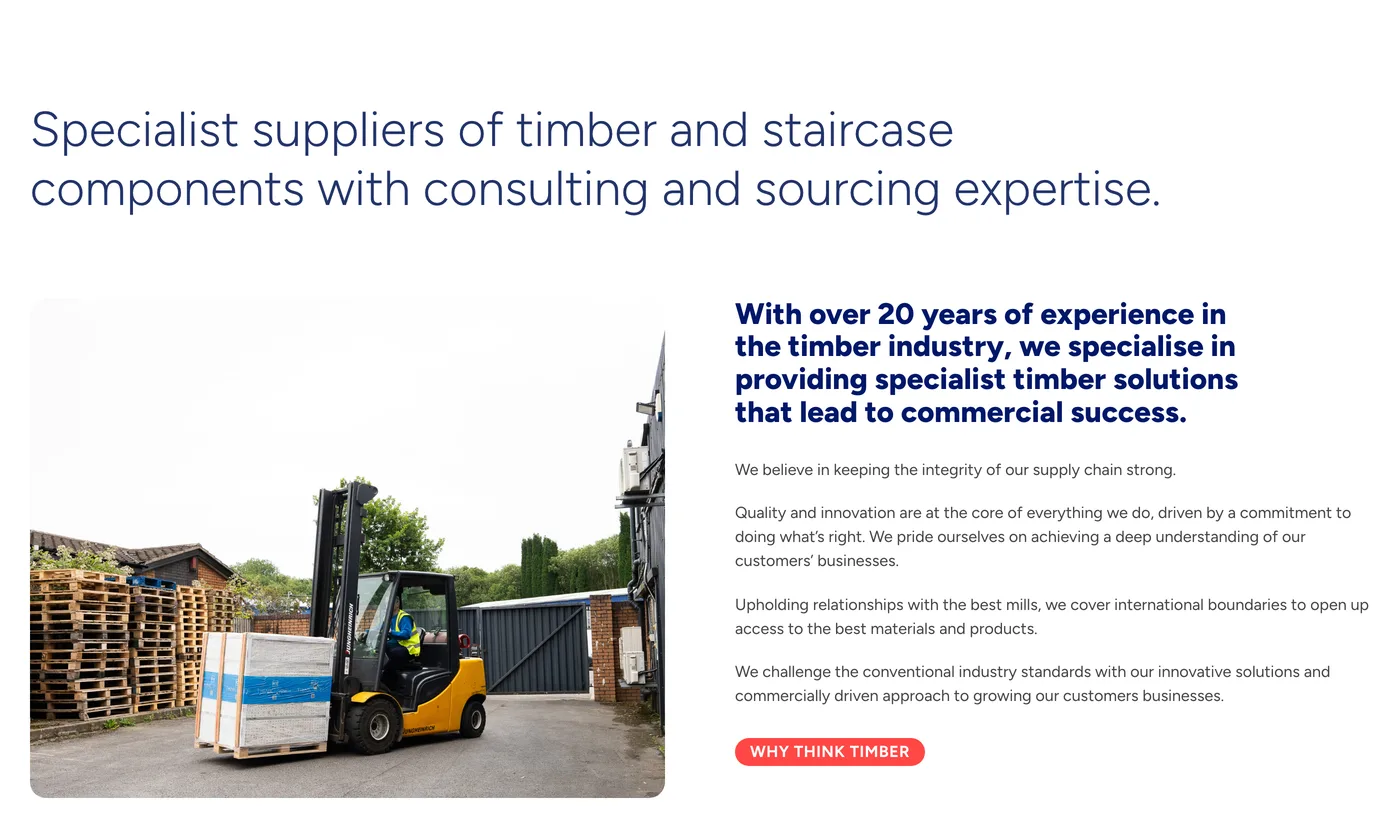
Think Timber supplies staircase components to the trade from its base in Staffordshire. Its customers range from volume manufacturers to small joinery firms, and they do not all buy the same way.
About Think Timber
Think Timber sells to businesses rather than the public, and that shapes what its website has to do. A trade customer is not browsing. They know what they need, they buy it regularly, and they expect the site to know who they are.
The challenge
Think Timber’s website is part of how the business trades, not a brochure beside it. Trade customers buy on account, stock and prices move, and orders have to reach the stock system without being typed in twice. Every order that cannot be placed properly online becomes a phone call, which is slower for the customer and more work for the team.
So the site is never finished. There is always a new product, a new rule for an account type or a better way for an order to flow, and the business needs people who already know how it all fits together.
And in a market that moves with timber prices, currency and housebuilding, keeping on top of what is changing is a job nobody in the team has time for.
What we do for them
The trade store. Customers log in to an account that reflects how they buy, and Think Timber manage the account types themselves. Orders go straight into their stock system with the right delivery option, and order statuses come back the other way, so customers can follow an order on the website. Out of stock products can be pre-ordered, and forward orders show what is still available after allocations.
The staff area. A private place for the team to work, with access that matches the job. Staff can switch into a customer’s account to see exactly what that customer sees.
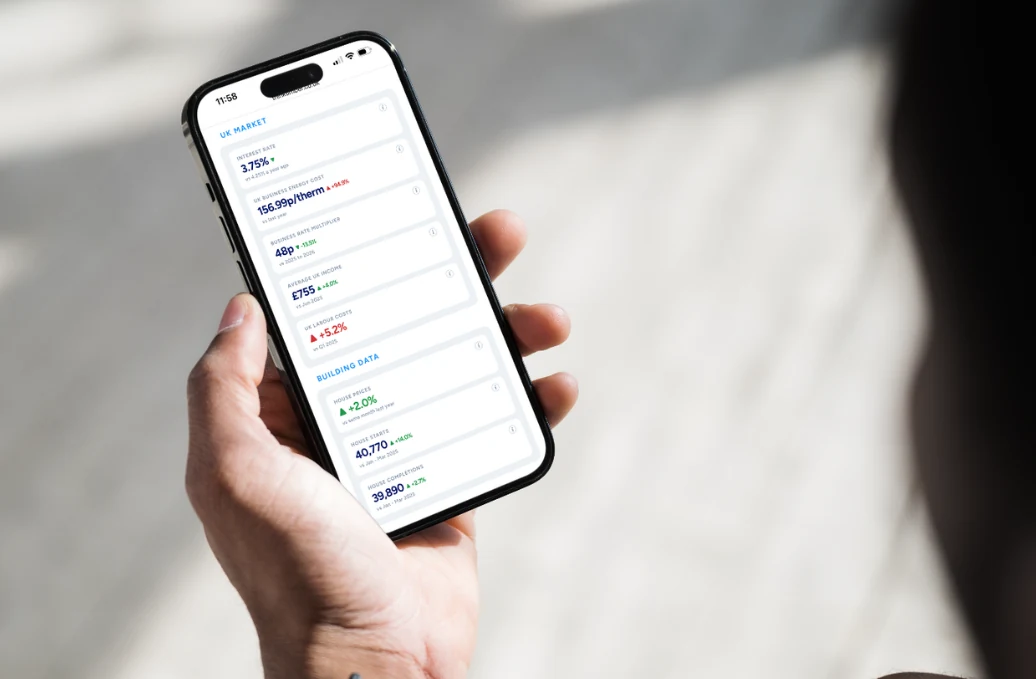
A daily industry brief. An AI tool that reads the market every morning and tells Think Timber what has moved and what it means for them. It is built around what actually moves a timber business, and we keep improving it rather than leaving it as it was.
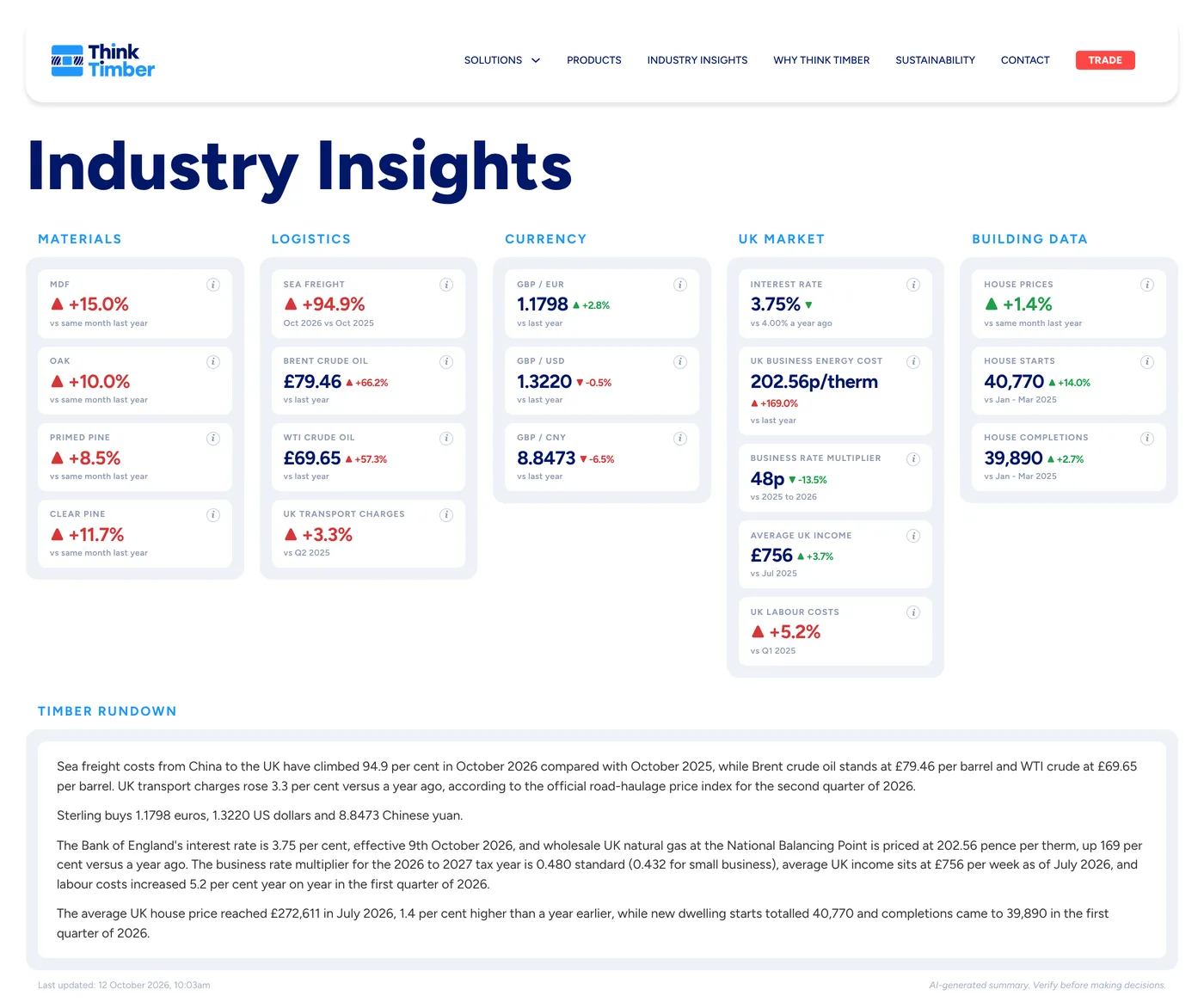
Alongside those, the everyday work keeps coming: new products and product images, width and length options, a clearance page, blog posts, an updated sustainability page and fresh figures for the industry brief each month. The site is hosted, secured, updated and backed up by Wrev, and every change is made by people who already know it.
The current site is one we built for them, and it went live in July 2026.
The results
Trade customers order online instead of by phone, on a site that treats them as the account they are rather than as a first-time visitor.
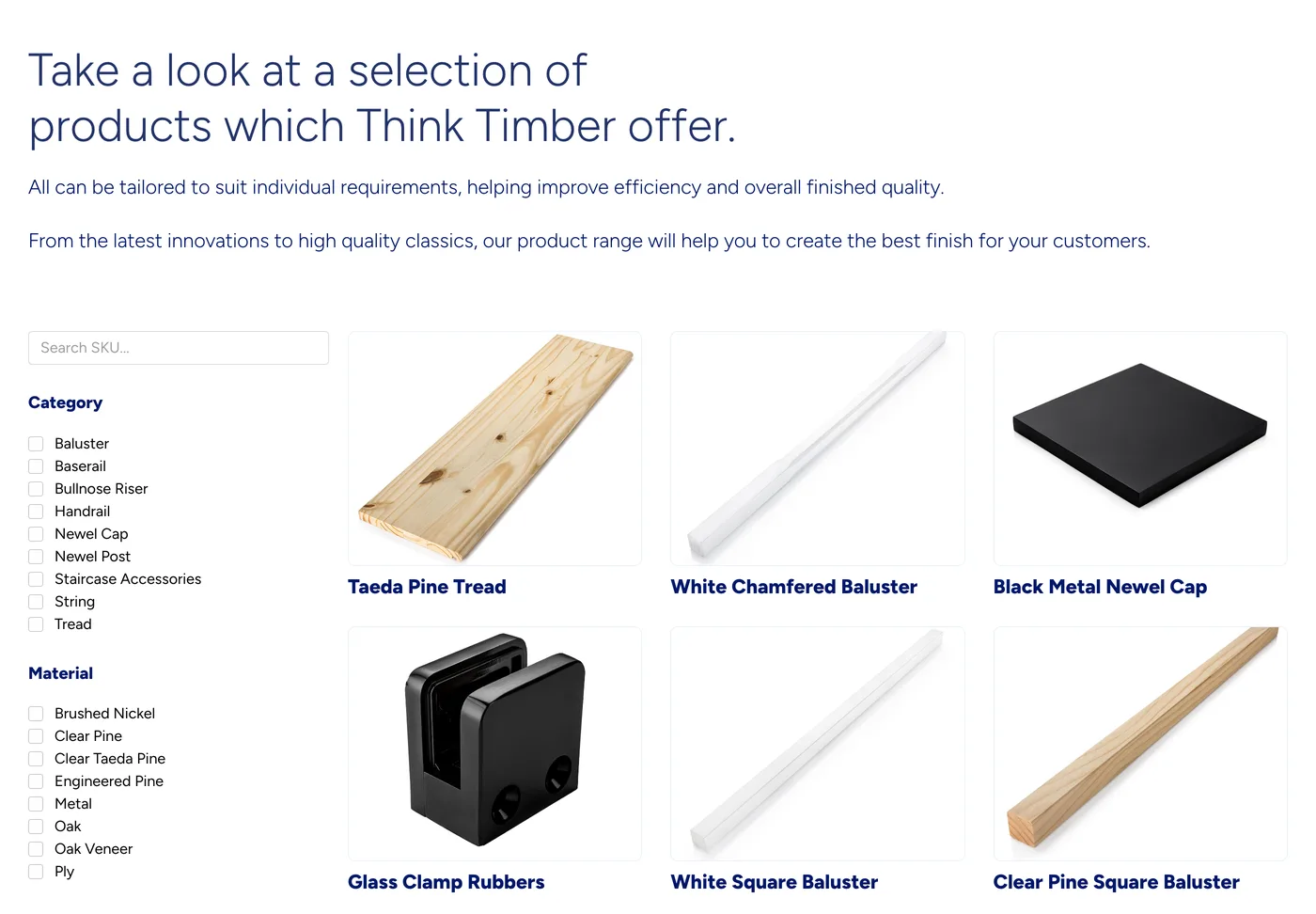
The team has one place to work from, and access does not have to be all or nothing.
And the business starts each day already briefed on its own market, rather than finding out later what had moved.
Speak to a developer, not a salesperson.
Pick a time that suits you and bring whatever you want to ask.